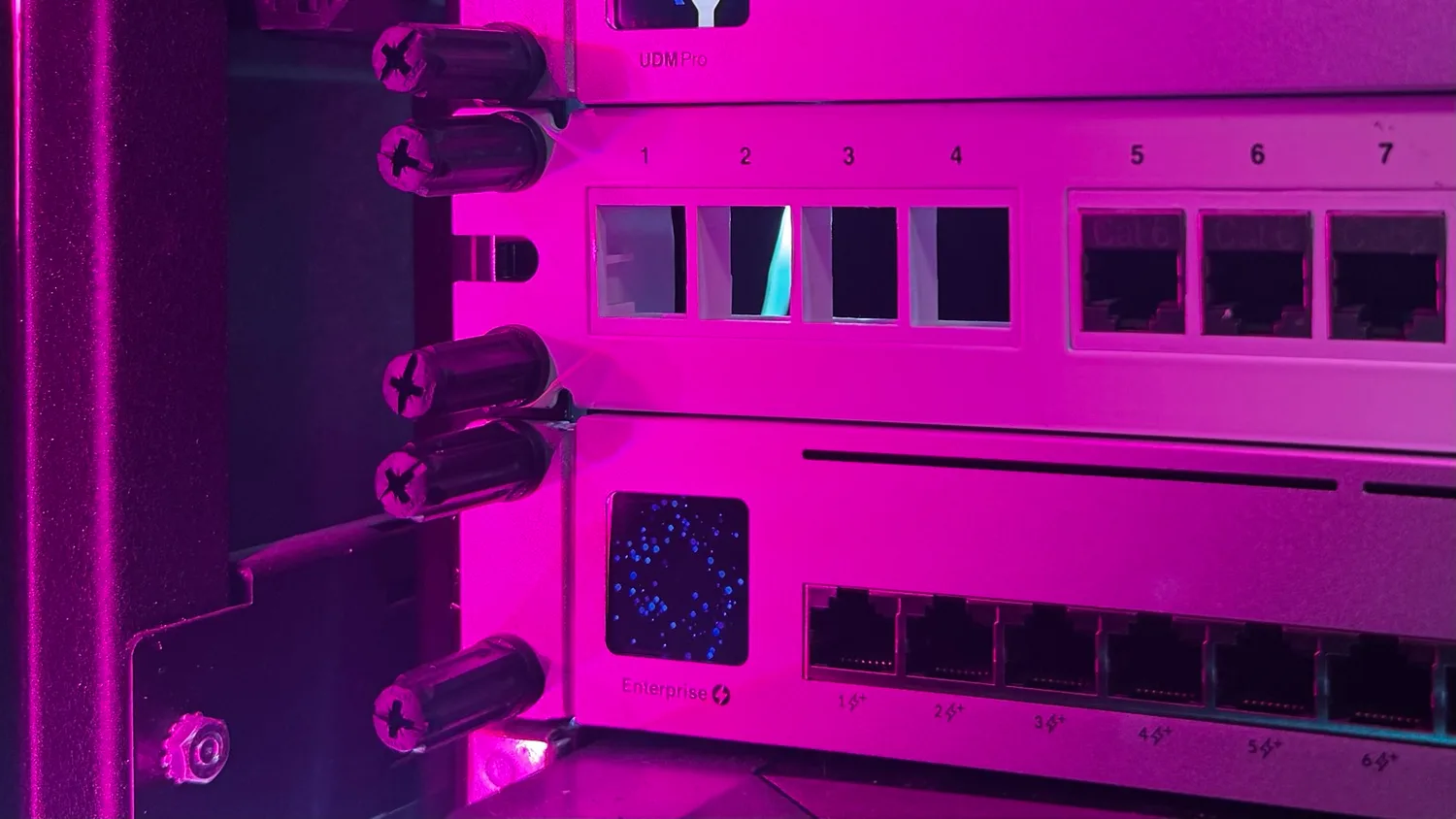
Ten years of running Rackstuds, consistently, across more rack builds than I would care to count. Treat this as a decade of use talking, not a first-impressions piece. I came for the time savings and stayed because nothing else has given me a reason to switch, and there have been ten years of chances to switch if something better came along.
What they are
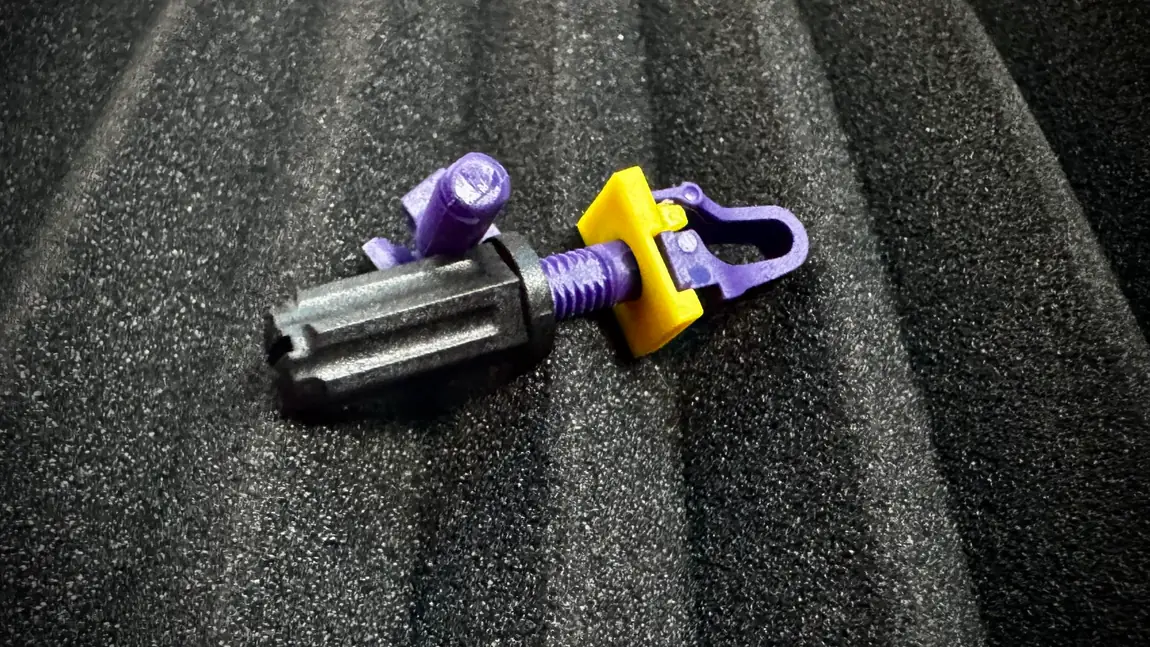
Every tech who has mounted gear in a 19-inch rack carries the same scar tissue, and the same memory of a cage nut springing loose and disappearing behind a loaded cabinet right when both hands are needed elsewhere. Cage nuts are how you quietly donate blood to a rack, one skinned knuckle at a time. The Series II studs end that. They insert from the front of the rail, give you a post to hang equipment on, and then a lock nut spins over a yellow washer to pin everything in place. No tools, no fishing behind the rack with a magnetic pickup at 2 in the morning, and they pull out and reuse cleanly when you reconfigure six months later.
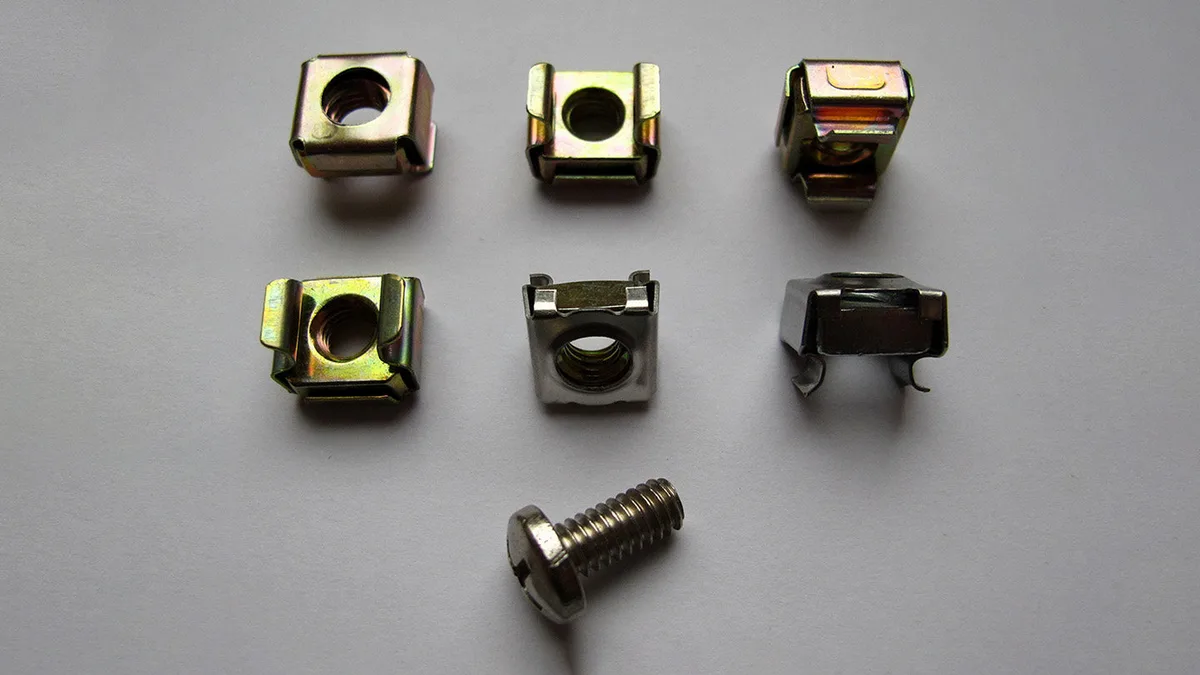
The washer matters more than it looks like it should. It spreads the load across the rail instead of letting the stud bite a single point, and it is a big part of why these hold gear as securely as they do without needing a socket wrench.
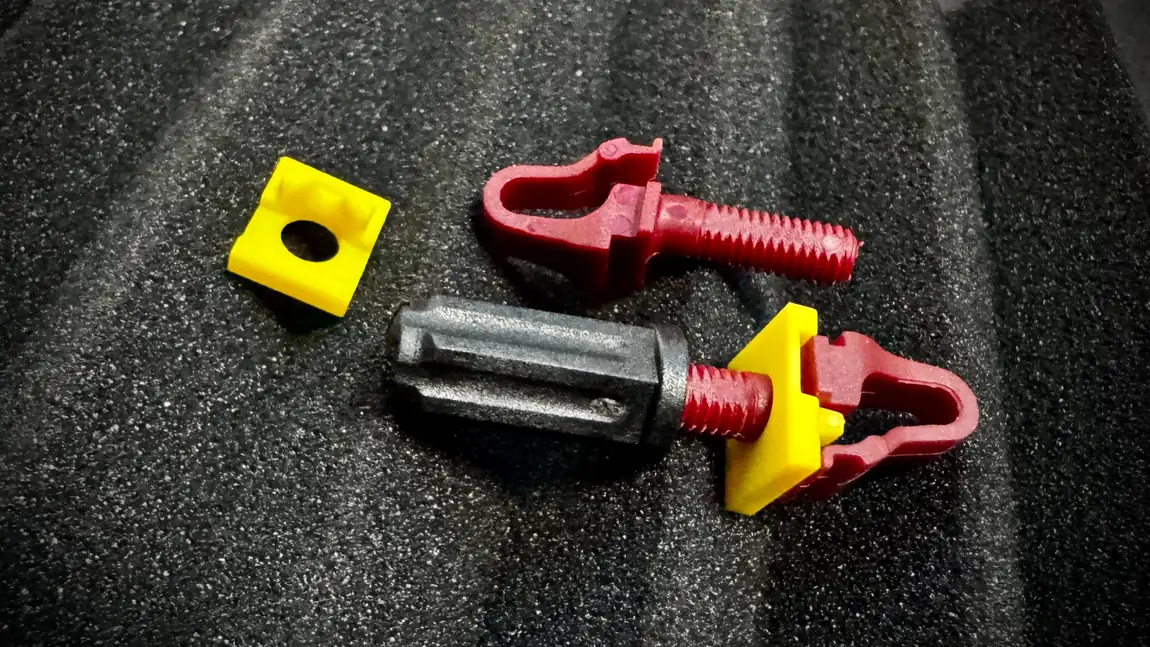
The Series II nut is the redesigned one. It carries a screwdriver slot so you can snug it with whatever is already in your hand, and longer threads that make catching heavier gear a little easier than the original. Neither is essential to the job, but both take friction out of a fast install.
Spec sheet
- Red (R) studs fit rails up to 2.2mm / 0.086 inches (14 gauge), which Rackstuds says covers roughly 80% of racks in the market
- Purple (P) studs are for a range, not a ceiling: 2.7 to 3.2mm (0.106 to 0.125 inches). They are for thicker open-frame rails, and they are not a drop-in substitute on thin rails, so check your rail spec rather than assuming Purple covers everything Red does
- Both fit square holes of 9.3 to 9.89mm (0.366 to 0.389 inches)
- Molded from Grivory, a glass-reinforced thermoplastic from the same family used in car wiper arms and door handles. Non-conductive, which matters on a live rack
- Rated working load is 20 kg (44 lb) across four studs. Independent yield testing by SGC Labs puts failure far above that: 46 kg (101 lb) push-in, 92 kg (202 lb) pull-out, 156 kg (343 lb) shear
- The Duo is the 1RU variant: two studs, no washer, no tools, installs in under 30 seconds, rated to the same 20 kg. Rackstuds pitches it as 3x faster than cage nuts
- Front-insert and single-handed, so no rear access needed
- Sold as R20/R100 and P20/P100 for the originals, DUO20 plus a 50-pack for the Duo
What it costs
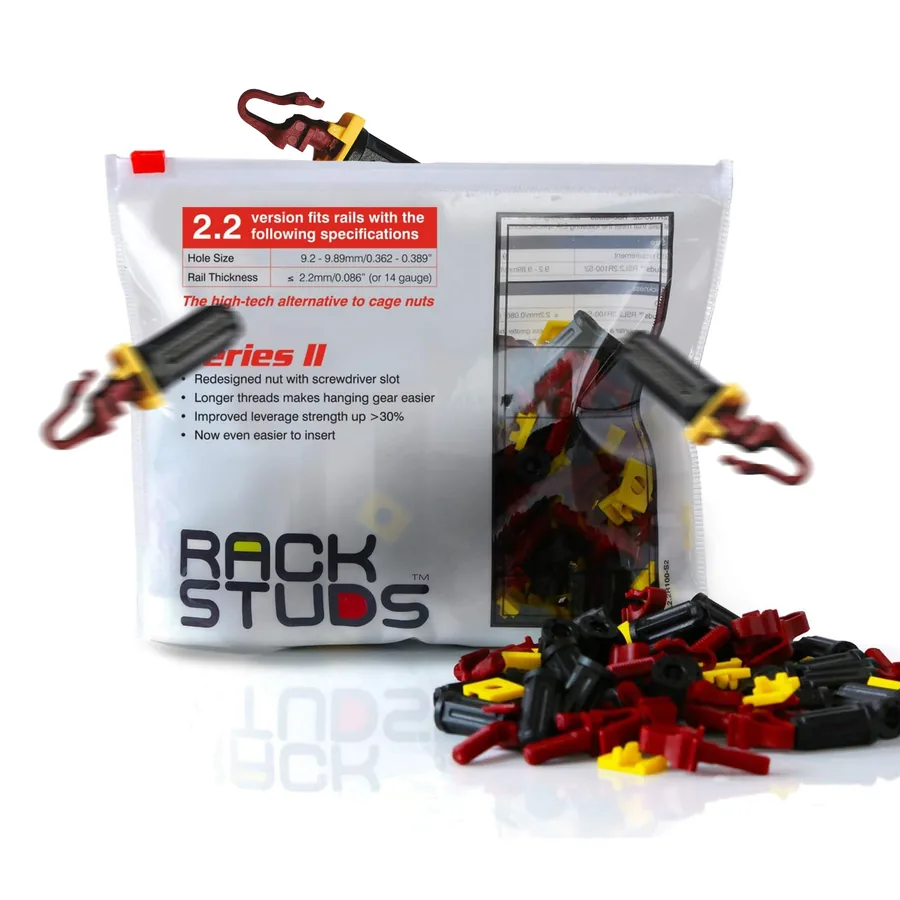
Through Canadian retail, expect roughly $21 to $25 CAD for an R20, about $62 to $75 CAD for an R100, and around $21 CAD for a DUO20, landing near $15 to $18 USD and $45 to $55 USD respectively at source. Confirm at purchase, since retailer pricing and the exchange rate both move. That is close to half what the metal alternatives run, which is a big part of why these keep getting bought instead of switching to something that sounds tougher on paper.
How they hold up after a decade
They hold network gear perfectly fine and make installs quick. That is the honest, boring truth, and it is the highest compliment for a tool that is supposed to disappear into the background of the job. The hero shot at the top of this review is a live UniFi stack, a UDM Pro, a patch panel, and an Enterprise switch, all hanging on these, and it has stayed put through the kind of moves and re-terminations a working rack sees.
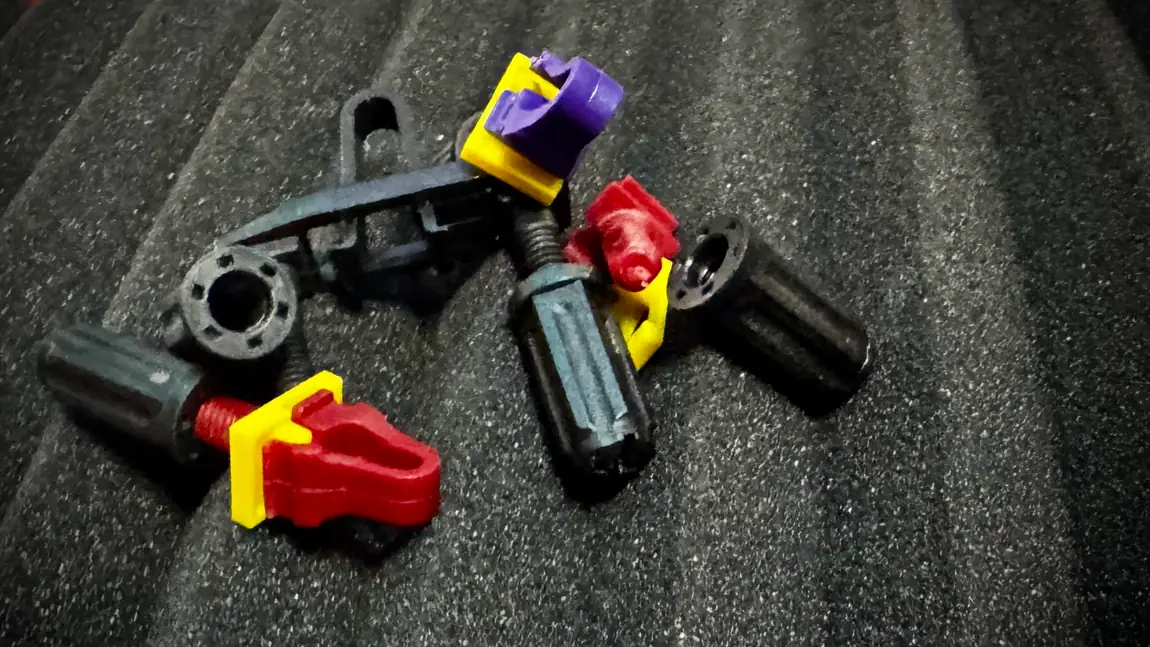
They are not indestructible. A fair few have snapped over the years, and here is the part worth owning: every single one broken was user error.
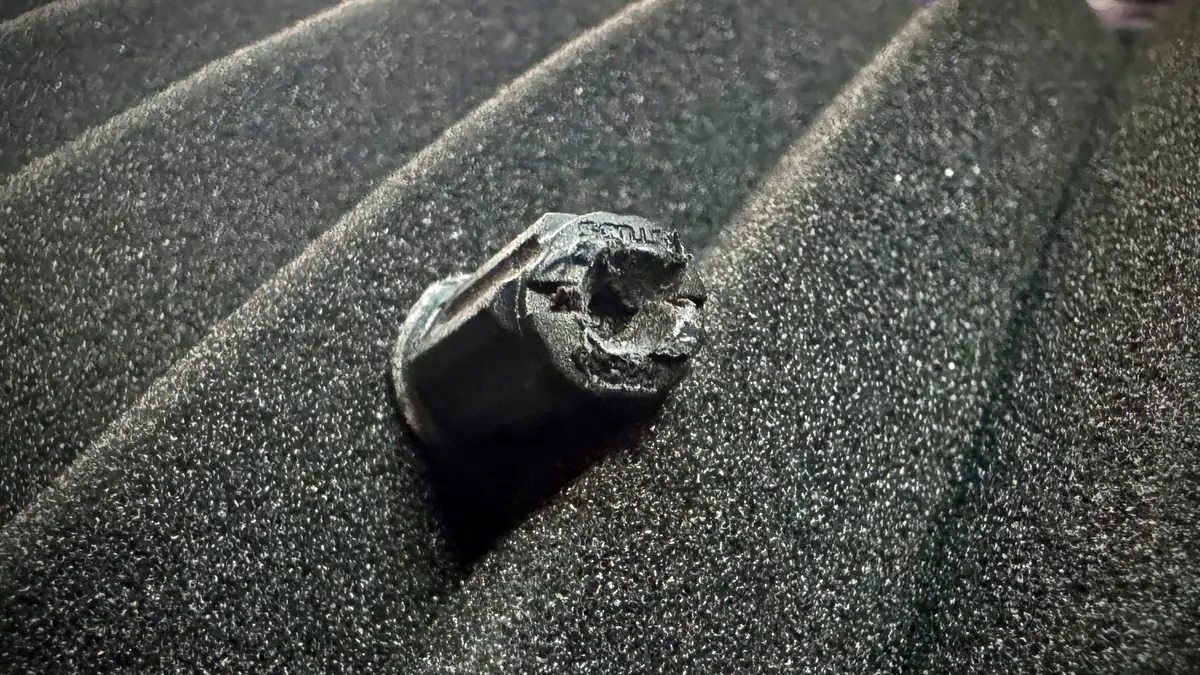
The nut above is the whole cautionary tale in one part. An impact driver went where fingers should have, and the head tore off long before the rail ever gave up. Every other failure here has been a quieter version of the same story: substantial overtorquing, ignoring the words hand-tight in a hurry to close out a ticket. Every broken stud is a monument to cranking on something that did not need it. Tighten them like a reasonable human, with a screwdriver at most and never a drill, and they last across builds, across relocations, across the kind of gear churn a busy rack goes through over ten years.
The Duo
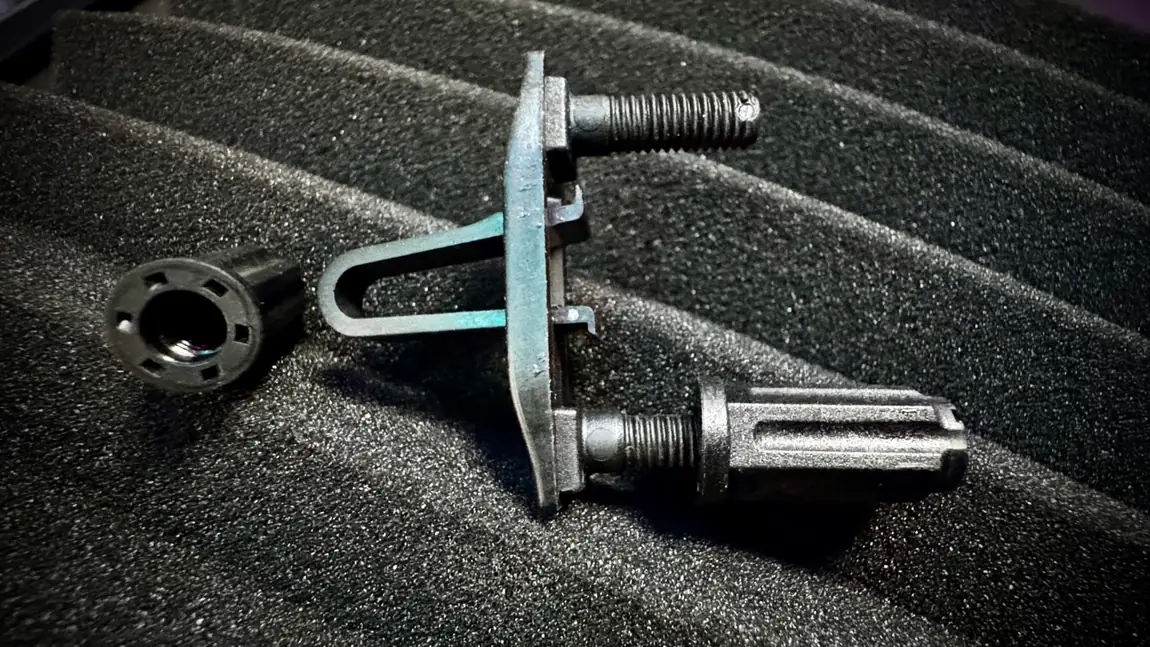
The Duo is genuinely quick for single-unit installs. Racking a row of light 1U gear, it is the fast pick, especially on a day with a dozen small devices to hang and not much time to hang them in.
The tradeoff is real though. The Duo does not feel as durable as the original. Dropping the washer is what makes it fast, and it is also what makes it feel a touch less planted under load. For light 1U work it is great. For anything with weight, switches, patch panels, heavier PDUs, the originals with the washer are still the pick.
Versus PatchBox /dev/mount
The main alternative is PatchBox’s /dev/mount. Those are metallic, which sounds like the obvious advantage on paper. Metal sounds tougher right up until you price it and then try to actually buy it. Rackstuds still look like the superior product for this work: much easier to get hold of, cheaper, close to half the price, and they get the job done for the installs run here.
That deserves a proper head-to-head before it becomes a hard verdict. The sets handled so far were not ours, and putting someone else’s hardware through the paces and grading it in public is how you end up confidently wrong. When there is an owned set, the shoot-out runs and we will report back.
Pros
- Ten years of continuous use across more rack builds than I can count, with nothing pulling toward switching
- Front-insert, single-handed installation, no rear access and no tools
- Roughly half the price of comparable metal alternatives, and easier to actually source
- Non-conductive Grivory construction, a real advantage on a live rack over metal hardware
- Two sizes (Red and Purple) cover the vast majority of rail thicknesses
- The Duo variant installs in about 30 seconds for fast, light 1U runs
- Reusable cleanly across reconfigurations, no stripped threads or degraded fit
Cons
- Not indestructible, and overtorquing will snap them, though in a decade every failure here has been self-inflicted
- The Duo trades some of the planted, secure feel of the original for speed, since it drops the load-spreading washer
- Sold in two rail-thickness variants that do not overlap. Red tops out at 2.2mm and Purple starts at 2.7mm, so a rail between those figures is not covered by either, and you need your rail spec before ordering
- Retailer pricing moves, so the numbers above are a snapshot, not a guarantee
What Rackstuds claims, and what we found
Rackstuds bills the Series II as the world’s most advanced rack mount solution. Advanced is a stretch for a clever plastic peg. Strip the hyperbole and the practical claims hold up: front insertion, single-handed mounting, and roughly 30% faster installs than cage nuts. After ten years, all three stand.
Where we push back is the durability halo. The independent SGC Labs numbers are genuinely reassuring on paper, and the marketing leans on figures like withstanding over 400 lb of force. Those are yield figures under controlled load in the direction the stud is designed to take it. They are not a licence to overtorque the lock nut, which is a different stress entirely and the one that actually snaps them. Strong for what they are, not bulletproof.
Where they land
For mounting IT, AV, security, and telco gear in square-hole rails, Rackstuds are a straight upgrade over cage nuts in speed, safety, and your knuckles. The original Series II is the one to trust for anything with mass, the Duo is the one to grab for fast light 1U runs.
Rating: 5 out of 5. Earned over a decade of real use. The Duo gives up a little confidence for speed, and they will break if you torque them like a gorilla, but neither of those is the product’s fault.